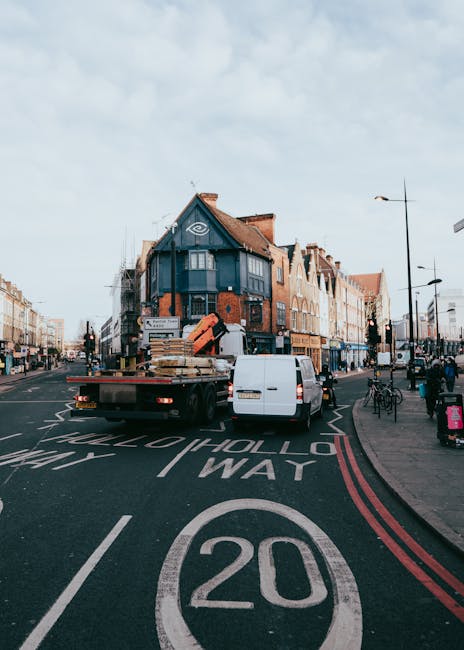
Pavement and Van Permits: UK Council Rules Explained

Trying to arrange a move or a delivery on a narrow UK street can feel like solving a puzzle with one missing piece. You have the van ready, the boxes stacked, the sofa wrapped, and then someone asks: "Have you checked the pavement permit?" That is usually the moment people realise how quickly a simple job can turn into a council paperwork issue.
This guide to Pavement and Van Permits: UK Council Rules Explained breaks the subject down in plain English. You will see what the permit is for, when it matters, how councils typically approach it, and how to avoid the small mistakes that can cause big delays. If you are planning a house move, office relocation, or even a bulky collection, it helps to understand the rules before the lorry pulls up and the clock starts ticking.
Where moving logistics are concerned, the details matter. A lot. The good news is that once you understand the logic behind council permits and pavement use, the whole process becomes much less stressful.
- Why pavement and van permits matter
- How the permit process works
- Benefits and practical advantages
- Who needs a permit and when
- Step-by-step guidance
- Expert tips
- Common mistakes to avoid
- Tools, resources and recommendations
- Law, compliance and best practice
- Options and comparison
- Real-world example
- Practical checklist
- Conclusion
- Frequently asked questions
Why Pavement and Van Permits: UK Council Rules Explained Matters
At first glance, a pavement or van permit can sound like minor admin. In reality, it affects safety, access, neighbour relations, and sometimes the whole timeline of your move. Councils use these permits and associated parking controls to protect pedestrians, manage road space, and reduce obstruction on public land.
That is the heart of it: pavements are for people, not for loading bays. If a vehicle needs to stand partly on a kerb, block a footway, or occupy restricted roadside space, a council may expect a permit, a suspension, or some other approved arrangement. The exact terminology changes from one authority to another, which is why people get confused so easily.
For households and businesses, the consequences of getting it wrong are not just theoretical. You may face a fine, a complaint from a resident, a delayed collection, or a vehicle forced to move just when the team is carrying something awkward and heavy. Anyone who has tried to move a wardrobe down a terraced street in the rain will know that losing your parking spot halfway through is not fun. Not fun at all.
If you are planning a move, this also connects directly to the practical side of the job. Services such as man and van support or a larger moving truck may need very different access arrangements depending on the street, the time of day, and whether the vehicle can stop legally and safely close to the property.
In busy urban areas, the permit question can be the difference between a tidy, efficient move and one that drags on for hours. In quieter suburbs, it may still matter if the road is narrow, there are school-run restrictions, or the council has its own loading rules. Truth be told, local variation is the whole game here.
How Pavement and Van Permits: UK Council Rules Explained Works
There is no single universal UK permit system for every street. Instead, councils tend to control parking, loading, and pavement access through local rules. Some operate formal permit schemes, some use parking suspensions, and some rely on loading exemptions in limited circumstances. The names differ, but the goal is similar: keep traffic flowing and prevent obstruction.
In practical terms, the process usually follows this shape:
- Identify the exact address, street, and vehicle type involved.
- Check whether the vehicle must stop on a yellow line, a loading bay, or near a restricted pavement area.
- Confirm whether a permit, suspension, or dispensation is needed.
- Apply in advance and keep records of the approval.
- Display or carry any required permit details as instructed by the council.
A "pavement permit" may refer to permission to place items, ramps, or temporary access equipment near the footway, or it may be part of a wider highway or parking approval. A "van permit" is often understood more broadly as permission for the vehicle to stop or occupy space in a controlled location. Councils do not all use the same labels, so always read the local wording carefully.
For moving jobs, timing is often the trickiest bit. You may need access early in the morning before neighbours are out, or later in the day when traffic has eased. Councils may place conditions on the time window, the length of stay, or the size of vehicle allowed. That matters if you are arranging home moves or coordinating a larger commercial move.
Sometimes people assume that a quick drop-off is exempt. Sometimes it is. Sometimes it is not. A short stop to unload can still count as parking or obstruction if the vehicle blocks a footway, sits on restrictions, or compromises safety. Councils tend to care less about how briefly it happened and more about whether rules were followed.
Key Benefits and Practical Advantages
It is easy to see permits as red tape, but done properly they solve real problems. A valid permit or council-approved arrangement can keep the move calm, lawful, and far more efficient.
Key benefits include:
- Better access: the van can get closer to the property, which reduces carrying distance.
- Lower disruption: neighbours, pedestrians, and traffic are less likely to be affected.
- Less risk of penalties: you reduce the chance of fines or enforcement action.
- Smoother timings: the crew can work without being forced to move the vehicle unexpectedly.
- Safer loading: fewer hurried lifts across a road or long walk to a distant parking bay.
There is also a less obvious benefit: planning. Once you have checked permit requirements, the rest of the move tends to fall into place. You can choose the right size vehicle, plan the loading order, and decide whether you need extra hands for carrying or packing. If you are already arranging packing and unpacking services, this is often the moment to bring permit checks into the same planning conversation.
Expert summary: A permit is not just about compliance; it is about making the move physically easier, safer, and less rushed. The best outcome is usually the boring one: a vehicle parked legally, a clear path for movers, and no surprises halfway through.
Who This Is For and When It Makes Sense
Not every move needs a permit, but a surprising number do. If you are working in a busy town centre, a conservation area, a terraced street, outside a flat block, or anywhere with controlled parking, it is worth checking early.
This topic matters most for:
- homeowners moving in or out of tight streets
- tenants in flats or maisonettes with limited curb access
- office managers arranging relocations during business hours
- landlords and letting agents handling furniture removals
- delivery teams bringing in bulky items
- anyone using a larger van or truck in a restricted area
It is especially relevant where a vehicle may need to partially mount the kerb, stop on a single yellow line, wait near a junction, or occupy space usually reserved for general traffic. If the road feels tight when you look at it from the pavement on a wet evening, it will probably feel tighter on moving day.
For commercial sites, the stakes can be a little higher. A delayed office move can affect staff, clients, and IT equipment, and a parking issue outside the building can ripple through the whole day. That is why businesses often pair permit checks with a relocation plan and, where needed, a service such as office relocation services.
Households planning a full property move may also want support from house removalists when the access is awkward or the load is substantial. The right team can spot access risks before they become delays. Small detail, big difference.
Step-by-Step Guidance
If you are wondering how to handle this without getting buried in admin, here is the simplest workable process.
- Check the address first. Look at the road layout, parking restrictions, loading space, and whether the pavement is likely to be affected.
- Assess the vehicle. A compact van and a large removal truck are not treated the same way in practice, even if the job is similar.
- Ask what the council requires. Some councils use permits, some use suspensions, and some have specific loading rules. The exact wording matters.
- Plan enough lead time. Do not leave the application until the day before unless the council explicitly allows it. That is a gamble, and not a clever one.
- Keep confirmation accessible. Save copies of approvals, reference numbers, and any instructions about display or timing.
- Brief everyone involved. Drivers, movers, and residents should know where the vehicle will stop and for how long.
- Have a backup plan. If access is blocked, know where the nearest legal loading point is and how far items may need to be carried.
One practical observation from real moving days: a good plan is often less about perfection and more about reducing friction. If you know you may need a longer carry, you can bring trolleys, blankets, and extra hands. If you know a permit is pending, you can avoid arriving too early and sitting there with the engine idling, waiting. Nobody enjoys that scene, least of all the driver.
For larger vehicles, it can be worth comparing whether a removal truck hire arrangement is genuinely necessary or whether a smaller vehicle would fit the location better. Sometimes the smarter choice is the less dramatic one.
Expert Tips for Better Results
Here are a few tips that tend to save time and reduce avoidable pain.
- Measure access, not just inventory. Doorways, gates, turns, kerb height, and distance from parking spot to entrance all matter.
- Check the street at the right time. A road that looks empty at 10 a.m. may be completely different at school-run or commuter time.
- Use the smallest practical vehicle. A slightly smaller van may avoid permit complications altogether.
- Build in slack. If the council approval window is tight, do not schedule the job to the minute.
- Keep neighbours in the loop. A quick heads-up can prevent awkwardness, especially on narrow roads where space is shared.
- Check whether items need staging. Heavy furniture may be better moved in sections rather than rushed from room to van.
If your move includes bulky furniture or one-off collections, a service like furniture pick up can be useful when the access point is straightforward but the items themselves are awkward. The key is matching the vehicle and the access plan to the real street conditions, not the ideal version in your head.
Also, do not underestimate weather. A damp pavement, a gusty day, or a dark winter morning can make loading slower and more hazardous. In the UK, that is hardly rare. Plan as if the weather may be mildly annoying, because frankly, it often is.
Common Mistakes to Avoid
Most permit-related problems come from a few predictable mistakes. The good news? They are easy enough to avoid once you know them.
- Assuming one council's rule applies everywhere. It rarely does.
- Leaving the application too late. Last-minute requests can limit your options.
- Booking the wrong size vehicle. This is more common than people think.
- Ignoring pavement obstruction. A vehicle may be on private drive or road edge, yet still create a pedestrian issue.
- Forgetting the return trip. The outbound move may be covered, but the collection of empty boxes or second load may not be.
- Not checking if roadworks or events are happening. These can change access completely.
Another subtle mistake is treating the permit as the whole job. It is not. A permit helps with access, yes, but it does not solve poor packing, weak lifting practice, or badly timed arrival. That is where proper planning and, where relevant, insurance and safety awareness become part of the picture too.
To be fair, nobody wakes up excited about parking rules. But the people who handle them early usually have calmer moves. The people who don't? They tend to remember the experience very vividly.
Tools, Resources and Recommendations
You do not need fancy software to deal with permits, but a few practical tools make life easier.
- Street photos: take clear images of the access point, kerb, and any restriction signs.
- Measurements: note vehicle length, doorway width, stair turns, and carry distance.
- Timeline notes: write down permit application dates, approval dates, and the moving slot.
- Moving inventory: list large or fragile items so you can plan loading order and vehicle size.
- Contact details: keep the council reference and the move coordinator's details in one place.
It also helps to use services and policies that are transparent about process. If you are comparing providers, take a moment to review things like pricing and quotes, payment and security, and terms and conditions. Those pages tell you a lot about how organised a company is before a van even turns up.
For people who care about environmental impact, it can also be sensible to look at recycling and sustainability. When a move generates unwanted furniture or packing waste, good disposal habits keep the process cleaner and more responsible.
If you want more background on the company behind this guidance, you can also read about us. And if you are ready to discuss a move, contact us is the natural next step.
Law, Compliance, Standards, or Best Practice
This topic sits in the overlap between local authority rules, highway management, and practical moving safety. Because councils set their own procedures, the safest approach is to treat every street as local until proven otherwise. That means reading the council's current instructions rather than relying on memory, a neighbour's advice, or what worked in another borough last year.
As best practice, aim to understand three things before the move:
- Whether the vehicle may stop legally at the location.
- Whether the pavement or footway will be affected.
- Whether there are conditions on timing, size, or duration.
In the UK, accessibility and pedestrian safety are not just courtesy issues; they are central to how public space is managed. A blocked pavement can create obvious problems for pushchairs, wheelchairs, older residents, and anyone simply trying to walk through with a shopping bag in one hand and a coffee in the other. It sounds small until you are the person trying to pass through.
For businesses, compliance also overlaps with duty of care. Safe loading, clear communication, and sensible scheduling are part of good practice, especially where staff, visitors, and customers may be nearby. If you are coordinating a corporate move, a page like commercial moves is often the right place to start, because the planning requirements are usually more involved than a standard house move.
Finally, keep privacy and operational records in mind if you are sharing customer or staff details during the booking process. Documents such as the privacy policy and related company policies should reassure you that information is handled carefully.
Options, Methods, or Comparison Table
When access is restricted, there are usually several ways to solve the problem. The right choice depends on road layout, job size, and how much time you have.
| Option | Best for | Pros | Watch-outs |
|---|---|---|---|
| Permit or suspension | Street-side loading in controlled areas | Closer access, clearer compliance, smoother loading | Needs lead time and local approval |
| Smaller van | Compact streets and lighter loads | Easier to park, often more flexible | May need more trips if the load is large |
| Parking farther away | Areas with no suitable permit option | Can still be workable without formal changes | Longer carry distance, slower loading, more labour |
| Dedicated truck hire | Large house or office moves | Handles bigger volumes in fewer trips | Harder to place on tight roads without planning |
There is no single winner here. A van that is too large for the street can create more problems than it solves, while a smaller van might mean extra journeys and more handling. In some cases, the better answer is simply the one with the least friction for the actual property and road.
Case Study or Real-World Example
Here is a realistic example from the kind of situation people run into all the time.
A family is moving from a narrow Victorian terrace on a residential street with limited parking. The property has no driveway, and the road is busy by 8 a.m. The team originally planned to use a larger vehicle because the inventory looked manageable on paper. But after checking the access, it became clear that the truck would struggle to park close enough without causing issues.
Instead, the move was reworked. The team used a more suitable van, moved the larger items first, and arranged the loading so the heaviest furniture came out while the parking space was still available. The family also packed fragile boxes separately, which kept the pace sensible. No drama, no rushing, no angry neighbour leaning out of a window. A small win, but a meaningful one.
The important part was not just the permit or the vehicle. It was the sequence. Access first, vehicle second, packing order third. That little shift saved a lot of time and probably a lot of stress too.
If the property had involved a bigger load, the team might have preferred a proper moving truck or even a more structured service from home moves. The right choice depends on the access, not the ego of the vehicle. A funny thought, but true.
Practical Checklist
Use this simple checklist before move day:
- Confirm the full address and road layout.
- Check whether pavement access or roadside stopping is restricted.
- Identify if the council requires a permit, suspension, or other approval.
- Allow enough time for the application to be processed.
- Choose a vehicle size that suits the street, not just the load.
- Measure the carry distance from parking point to entrance.
- Tell everyone involved what the access plan is.
- Keep permit confirmation and reference details handy.
- Prepare a backup parking or loading plan.
- Review safety, insurance, and payment details before booking.
If you are moving furniture, offices, or a full home, it also helps to group related tasks together. Packing, parking, and vehicle choice all connect. Once you see them as one plan, the whole job becomes easier to manage.
Get a free quote today and see how much you can save.
Conclusion
Pavement and van permits can feel like a small administrative issue, but they shape the entire moving experience. The right permit or council-approved access arrangement keeps the pavement clear, reduces the risk of fines, and gives the crew a proper working setup. That means less carrying, less waiting, and fewer little problems that snowball into a long, frustrating day.
The main lesson is simple: check access early, understand the local council rules, and match the vehicle to the street. Do that, and you are already ahead of most people. Not glamorous, perhaps, but very effective.
When the moving day comes, a well-planned arrival can make the whole thing feel almost calm. Almost. And in this line of work, calm is underrated.
Frequently Asked Questions
Do I always need a permit for a van to stop outside my house?
No, not always. It depends on the street, the parking restrictions, whether the van would block traffic or the pavement, and the specific council rules in that area.
What is the difference between a pavement permit and a van permit?
The wording varies by council, but a pavement permit usually relates to using or affecting the footway, while a van permit is often about vehicle stopping, loading, or parking in a controlled space. The local terminology matters more than the label.
Can a moving van stop on a yellow line?
Sometimes loading exemptions may apply, but they are limited and not automatic. The driver should check the local rules and make sure the stop is genuinely for loading or unloading, not convenience parking.
How far in advance should I check council permit rules?
As early as possible. A few days may be enough in some cases, but others need more lead time. If the move is important, do not leave this to the final 24 hours.
What happens if I do not get the right permit?
You may face enforcement action, delays, complaints, or the vehicle being forced to move. The biggest issue is often the knock-on effect on the move itself.
Are permits needed for small vans as well as large trucks?
Yes, sometimes. Vehicle size matters, but so does where it stops and how long it stays there. A small van can still cause a parking or pavement problem if the road is tight.
Is it better to use a smaller van and make more trips?
Not always, but it can be the smarter choice on narrow roads. Smaller vehicles are often easier to place legally and safely, though they may need extra journeys if the load is large.
Do office moves face the same permit issues as home moves?
Often yes, and sometimes the challenges are greater because of business hours, loading bay rules, and higher foot traffic. Office relocations benefit from early access planning and clear scheduling.
Can I arrange everything myself, or should I use a removal service?
You can do either, but a removal service can help if the access is awkward, the items are heavy, or the parking setup is uncertain. A good team will think about the street as well as the boxes.
What documents should I keep for move day?
Keep permit approvals, council reference details, vehicle information, booking confirmation, and any instructions about display or timing. Having it all in one place avoids last-minute panic.
How do I know whether my road is likely to need council approval?
If the road is narrow, heavily parked, on a restricted bay, near a junction, or in a busy urban area, it is worth checking. Even if you are unsure, asking early is better than guessing.
Where can I get more help with planning the move?
Start with the pages that explain services, pricing, safety, and contact details. If you need a broader moving plan, the most useful next step is often to compare the vehicle and service to the access situation, not just the room count.